Your motivation, energy, and focus can be so completely drained by stress that even easy chores become too much to handle. You’re drained, not lazy or broken, if you’re finding it difficult to care about objectives you used to be passionate about.
The great news? Inspiration may come back. And when it does, it might be more resilient, robust, and long-lasting than it was previously.
This approach, which is supported by psychology, neuroscience, and doable actions you can take right away, will teach you how to recover motivation after Emotional Exhaustion.
What Does Emotional Exhaustion Mean?
Long-term stress, anxiety, or emotional excess can lead to emotional exhaustion, a condition of mental and emotional depletion. It is frequently associated with long stretches of self-neglect, toxic work situations, burnout, anxiety, and caregiver exhaustion.
Having a disconnected or emotionally numb feeling.
Overwhelmed with little jobs or irritable.
Finding it difficult to focus or make choices.
Emotional weariness, in contrast to regular fatigue, does not go away after a restful night’s sleep.
Why When You’re Emotionally Depleted, Motivation Fades
Motivation is closely related to your neural system and is more than just willpower.
When you’re emotionally worn out:
Your brain puts survival ahead of growth.
Adrenaline and other stress chemicals continue to rise.
Your reward system starts to react less quickly.
To save energy, your mind avoids exertion.
Forced incentive frequently backfires because of this. Restoring emotional safety is crucial.
Quit Trying to “Push Through It” Attempting to rush back to motivation after experiencing emotional tiredness is one of the most common mistakes people make. Your brain receives a message when you push harder:
“The danger still exists.”
Rather, allow yourself to slow down without feeling guilty. Under continual self-pressure, motivation cannot develop.
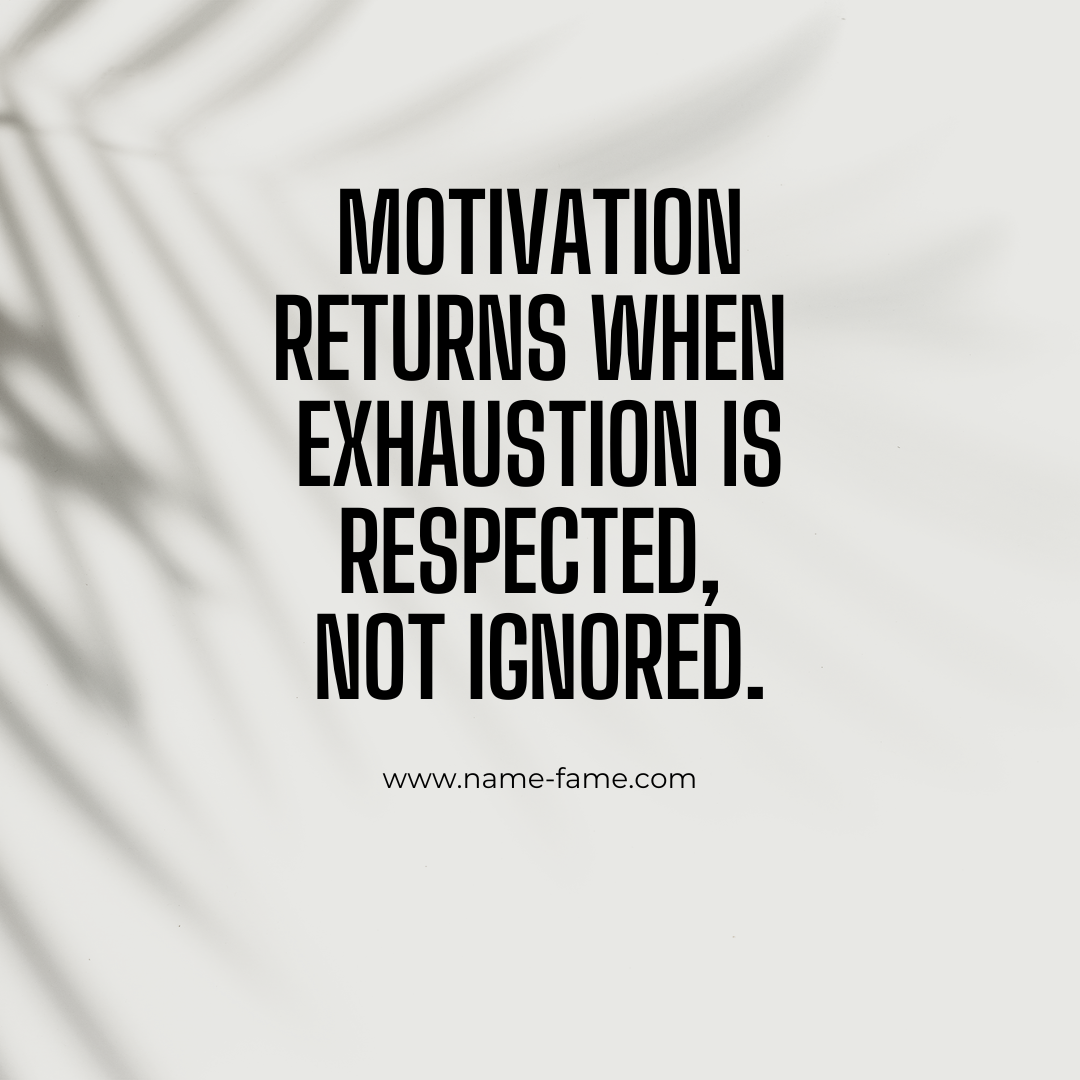
Rephrase this fact: Rest is not a reward. It’s a must.
Prioritize Emotional Healing Over Productivity
Before establishing new objectives, inquire:
What feelings am I carrying at the moment?
In order to operate, what have I been suppressing?
Unprocessed emotions are a common cause of emotional tiredness.
Your brain’s reward system is dulled by emotional tiredness. It can be softly reset by:
Getting sunshine within half an hour of waking up
Lightly moving your body (walking, stretching)
Cutting down on excessive screen time
Honoring work rather than results
Steer clear of relying exclusively on fast pleasure (junk food, scrolling), as this exacerbates motivation dips.
Reestablish Your Purpose Without Stress
Grand plans are not the way that purpose returns. Alignment allows it to return.
Contemplate:
What is important to me right now, not prior to burnout?
What type of life do I want to live—not simply accomplish?
Don’t modify your responses.
Meaning-based motivation is significantly more enduring than fear-based motivation.
Guard Your Energy Like a Non-Negotiable Treasure
Your motivation will continue to crumble if you don’t safeguard your emotional energy.
Establish limits around:
Working too much
Without reciprocity, emotional labor
Continuous accessibility
Energy conservation is strategic rather than self-serving.
After experiencing emotional exhaustion, how long does it take to regain motivation?
The timeline is not set in stone.
It takes weeks for some people to feel better. Some require months.
The most important thing is to be consistent without passing judgment on oneself. When you quit fighting yourself, motivation comes back more quickly.
Conclusion: You’re Healing, Not Failing
You don’t have to give up on your goals just because you’re emotionally spent. It indicates that your system requires maintenance rather than criticism.
Motivation comes back organically when you put emotional healing first.
Begin modestly. Have patience. Keep your energy safe.