Loneliness and being alone are not the same thing, despite what many people believe.
While spending time alone is a deliberate decision to spend time with oneself, loneliness is the experience of being cut off from other people. People are continuously surrounded by notifications, conversations, obligations, and distractions in today’s fast-paced environment. Many consequently seldom have the opportunity to stop and re-establish a connection with themselves.
Although spending time alone can initially be uncomfortable, it frequently gives us the space we sorely need to ponder, think, and rejuvenate.
Avoiding people is not the goal of spending time alone. It’s about generating moments that enhance your mental health and help you better comprehend who you are.
The Difference Between Being Alone and Being Lonely
Because they believe that spending time alone will result in loneliness, many people are afraid of it.
SEE ALSO: 7 Stoic Laws for Silent, Unwavering Power in Any Space
However, healthy alone time is deliberate and rejuvenating, whereas loneliness results from a lack of meaningful connection.
When you decide to spend time by yourself, you allow yourself to:
- Refresh your mind,
- think back on your experiences,
- manage your feelings,
- and concentrate on your own development.
A key component of emotional well-being is learning to love your own company.
Alone Time Helps Reduce Stress
When your mind is continuously digesting information from job, social media, family obligations, and everyday obstacles, life can seem overwhelming.
Your brain can slow down when you spend time alone.
Activities like:
- going for a stroll,
- reading a book,
- sitting quietly,
- and keeping a journal
can lessen tension and quiet brain chatter.
Every day, even a short period of quiet time can have a significant impact.
SEE ALSO: Zero to Billions: 10 Inspiring Stories of the Billionaires Who Made It from Nothing
It Improves Self-Awareness
It’s hard to comprehend your thoughts, sentiments, and objectives while you’re always busy.
Self-reflection is made possible by time spent alone.
You might start asking yourself:
- What genuinely brings me joy?
- What do I prioritize?
- Which habits are beneficial or detrimental to me?
- What type of life am I hoping to create?
These inquiries may result in insightful discoveries and personal development.
Spending Time Alone Builds Emotional Resilience
To escape uncomfortable emotions, a lot of people constantly divert their attention.
Sadly, feelings that are disregarded seldom go away. They frequently make a bigger comeback later.
Spending time with yourself enables you to comprehend:
- displeasure,
- annoyance,
- grief,
- concern,
- and uncertainty
in a healthful manner.
Over time, this improves your emotional fortitude and enables you to deal with difficulties more skillfully.
SEE ALSO: How Small Victories Result in Huge Success
Solitude Often Develops Creativity
In calm times, some of the best ideas come to mind.
When there are no continual interruptions, your mind can:
- Use creativity to address issues.
- create fresh concepts
- and make original connections between ideas
Because it improves their ability to think effectively, many authors, artists, entrepreneurs, and innovators purposefully set aside time for alone.
Alone Time Improves Relationships
Spending time alone can really strengthen your relationships, which may come as a surprise.
When you give yourself time to rest, you frequently turn into:
- less emotionally reactive,
- more patient,
- more present,
- and better at listening
Both connection and personal space are necessary for healthy relationships.
You can be more fully present for others when you take care of yourself.
SEE ALSO: Unique Techniques to Calm the Mind and Obtain Clarity
Simple Ways to Enjoy Alone Time
The advantages don’t require spending a whole weekend by yourself.
Begin with modest tasks like:
Go on a Walk Without Using Your Phone
Distraction-free walking promotes mental clarity and heightened awareness of your environment.
Go through a book
You can unwind while learning something new or gaining an alternative viewpoint via reading.
Write Down Your Thoughts
Emotions can be arranged and mental clutter can be decreased by writing down your ideas.
Engage in Mindfulness
You can stay calm and in the moment by practicing simple breathing techniques or silent introspection.
Take Up a Hobby
Engaging in activities such as painting, gardening, cooking, photography, or crafting can enhance the enjoyment and significance of alone time.
It’s Crucial to Find Balance
Even though spending time alone has numerous advantages, balance is crucial.
Because they are social creatures by nature, humans require deep connections. The objective is to establish a good balance between connection and solitude rather than to isolate oneself.
Burnout can result from too little alone time, and emotional health can be negatively impacted by too much solitude.
Striking the correct balance promotes both personal development and mental health.
SEE ALSO: The Science of Motivation: The Brain’s Role in Success
Conclusion
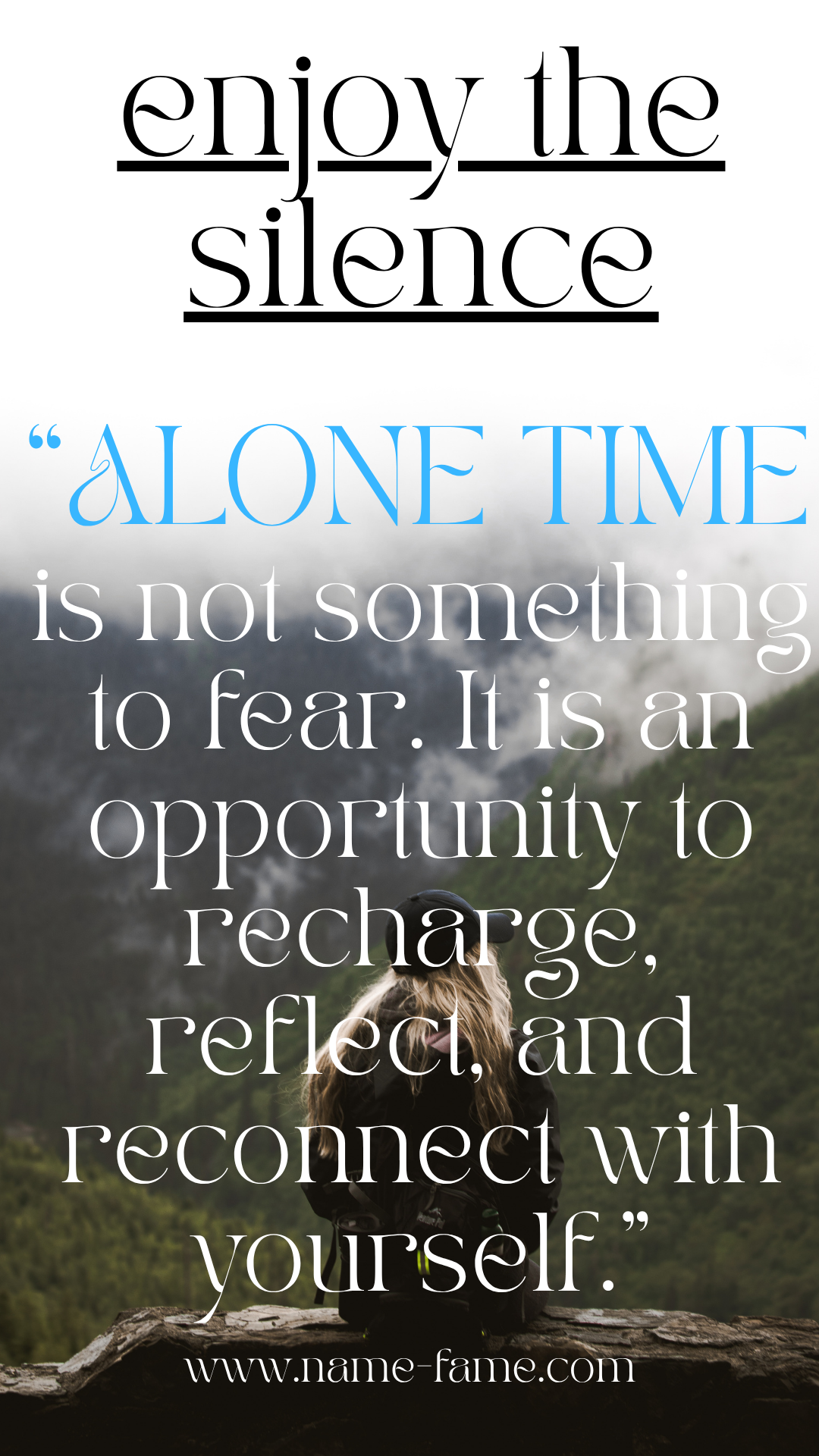
You shouldn’t be afraid of being by yourself. It’s a chance to rejuvenate, think, and re-establish a connection with yourself.
You can lower stress, increase self-awareness, bolster emotional resilience, and obtain more clarity about your life and objectives by making time for yourself.
One of the most beneficial habits you can form for your mental health in a world full of noise and distractions is learning to cherish your alone time.
The best solutions can sometimes be found in the quietest times.
The Greatest Book Suggestion:
Solitude
This timeless book examines the benefits of isolation and discusses how it fosters creativity, self-discovery, emotional well-being, and personal fulfillment.
Why It’s Recommended:
- promotes constructive introspection
- explains the distinction between isolation and loneliness.
- provides information about creativity and personal development.
- helps readers understand the advantages of spending time alone.