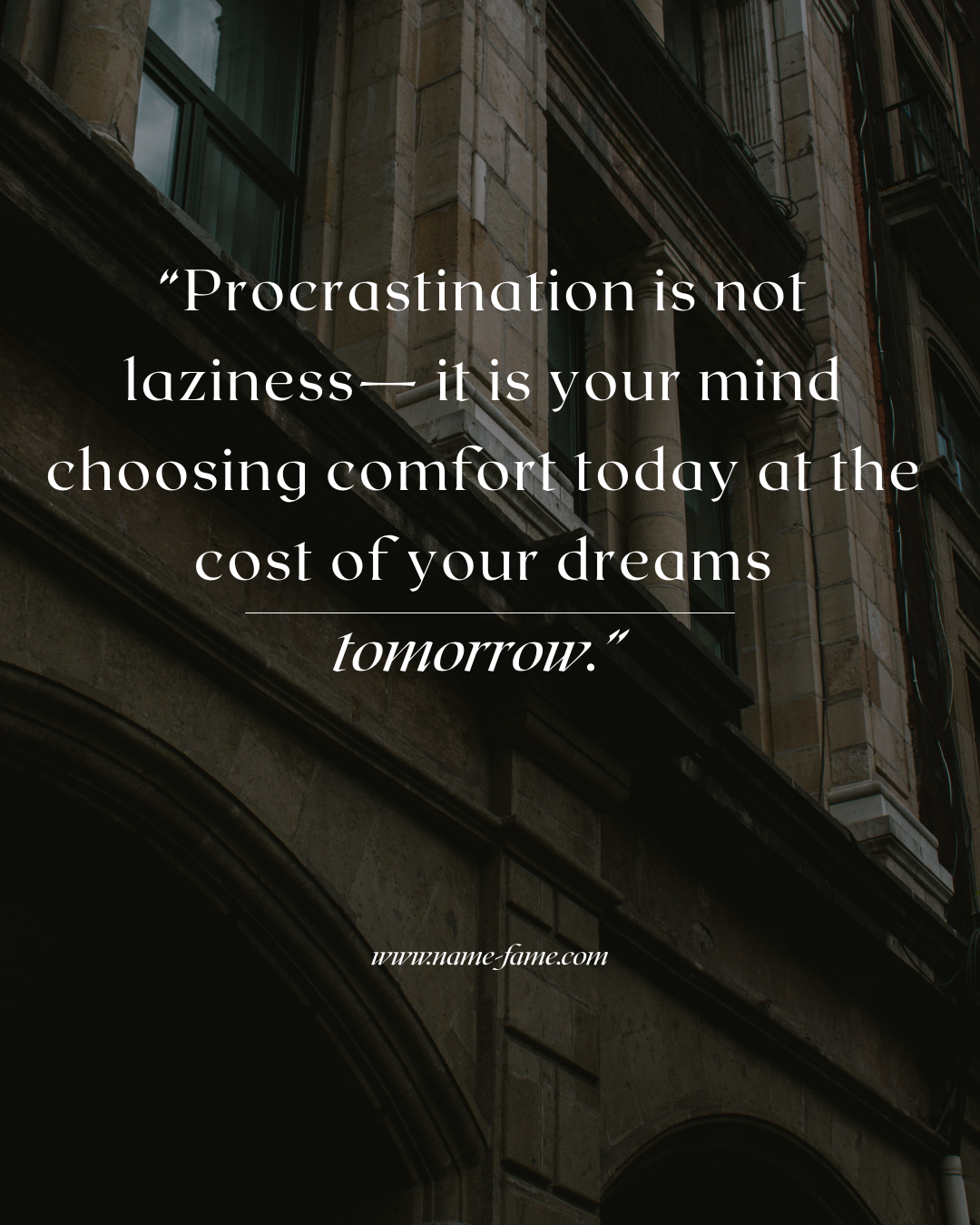
The Unspoken Truth. Most people think that procrastinating is a sign of being lazy. After putting off tasks and evading accountability, you accuse yourself of being ineffective. The story in psychology, however, is very different. Psychology reveals that the reason why people procrastinate is not laziness but rather emotional distress.
Procrastination is an emotional reaction rather than a character defect, according to study. Your brain is working to keep you comfortable, not to sabotage your achievement. The issue lies in the fact that this protection actually works against you in the long run.
Knowing why your mind acts in this manner gives you control over your habits rather than allowing them to rule you. This article outlines the actual psychological causes of procrastination as well as strategies for overcoming it.
Why People Procrastinate: What Psychology Really Says
According to psychology, procrastination is the deliberate postponement of crucial tasks even when one is aware that doing so will have unfavorable effects. You avoid the task even though you are well aware that delaying will lead to tension later.
This occurs as a result of your brain giving immediate emotional comfort precedence over long-term achievement. To put it simply, your mind choose “feel good now” over “benefit later.” That is the main reason people put things off.
Why People Procrastinate According to Psychology
One of the primary causes of why people procrastination in modern life. You regain control over your habits when you understand why people procrastinate.
The True Reason: Avoidance of Emotions
Emotional avoidance is the main cause of procrastination. Your brain automatically associates a challenging activity with pressure, tension, or dread. Your mind searches for immediate relief rather than confronting that suffering.
This explains why, rather than starting your work, you suddenly feel the need to browse social media, watch movies, or engage in other sporadic activities. For a while, you feel better, but thereafter, you experience guilt, anxiety, and frustration. Your brain learns that avoidance provides temporary respite, which is why this cycle keeps happening.
The Modern Life Dopamine Trap
Dopamine is the feel-good chemical that your brain is addicted to. Games, entertainment, short movies, and social media all quickly and easily release dopamine. Work and postponed gratification are necessary for learning, developing, or creating something worthwhile.
Your brain therefore inherently values immediate gratification over effort. You become less focused, less patient, and more prone to procrastinate as a result. Because of this, even highly bright people find it difficult to maintain discipline in the modern digital world.
Your actions are motivated by underlying psychological issues. Fear of failure is one of the main causes. Even though you might not be aware of it, you may secretly fear failing at something. Your brain steers clear of the task entirely rather than taking the chance of failing.
Perfectionism is another factor. Because they want everything to be flawless before they start, many people put things off. Paradoxically, this way of thinking keeps them from ever beginning.
Overwhelm is also a major factor. Your thinking shuts down and you feel stuck when a task appears too large. You avoid it completely rather than breaking it down into smaller steps.
Lastly, a lack of direction can aggravate procrastination. Your motivation will remain low and distraction will be easy to overcome if you do not feel a strong connection to your goals.
How to Combat Procrastination, According to Psychology?
The five-minute rule is one effective strategy. You tell your brain that you will only work for five minutes, rather than pushing yourself to do everything. Momentum naturally rises once you get going, and you frequently keep going far longer than you had anticipated.
An other successful tactic is to divide large jobs into smaller ones. Your resistance lessens as the work becomes more manageable. Little victories boost self-esteem and ease tension.
Your surroundings are important as well. Distraction is nearly impossible to avoid when your phone is close at hand. Focus is considerably simpler when temptations are eliminated before you start.
Moreover, visualization has the power to transform lives. Your brain begins to associate effort with pleasant emotions rather than dread when you visualize the feelings of relief and pride you will experience after finishing a task.
A Mindset That Transforms Everything
Instead of labeling oneself lazy, begin to view procrastination as a habit rather than a personal characteristic. With practice, awareness, and patience, habits can be broken.
The more self-aware you are, the less control procrastination has over you. You are only developing mental mastery; you are not broken.
Conclusion: Your Brain Can Be Rewired
Psychology demonstrates unequivocally that procrastination is a learned behavior rather than an innate characteristic. By using the appropriate techniques, you may teach your brain to behave in a different way.
It is constancy, not perfection, that leads to success. You build mental strength each time you begin, even if you don’t feel like it. With time, this fosters self-control, self-assurance, and genuine life advancement.